with REINA
WHO ARE YOU?
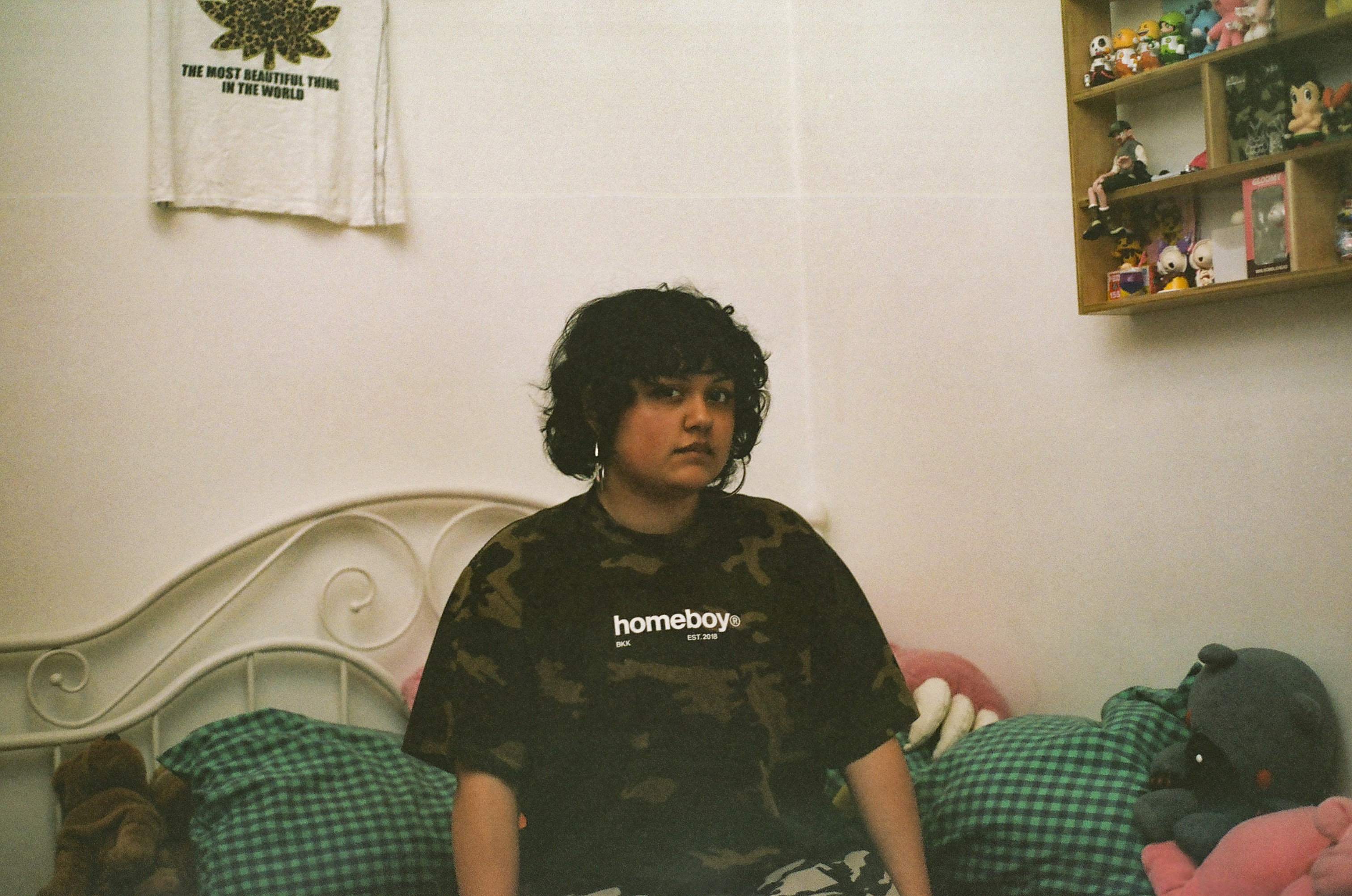
My name is Reina. I also go by the artist name Mango, sometimes randomly online. I would say I'm an artist and a community builder.. Right now, I'm also a designer. I like to think of that as my medium…lover of all things.
E: Where did Mango come from?
C: Big Filipino in the house.
Yeah, that's honestly what it is. When my mom was pregnant with me, literally her biggest craving was for dried mangoes. Growing up, I was always snacking on dried mangoes. My dad actually was a graffiti artist. So, when I was little, that’s kind of the community that I was in. So, in my head, I was like, oh, if I'm an artist I also have to have an artist name, everyone has an artist name. So, I just went with Mango and it kind of just stuck. I actually tried to change it before. When I graduated from school, I was like, I have to be professional. I wanted people to be able to find me. But the change only lasted one day. I was like, " This feels so wrong. Like, I can't do it.
C: What did you change it to?
I just put, like, my real name.
C: The full gov-o?
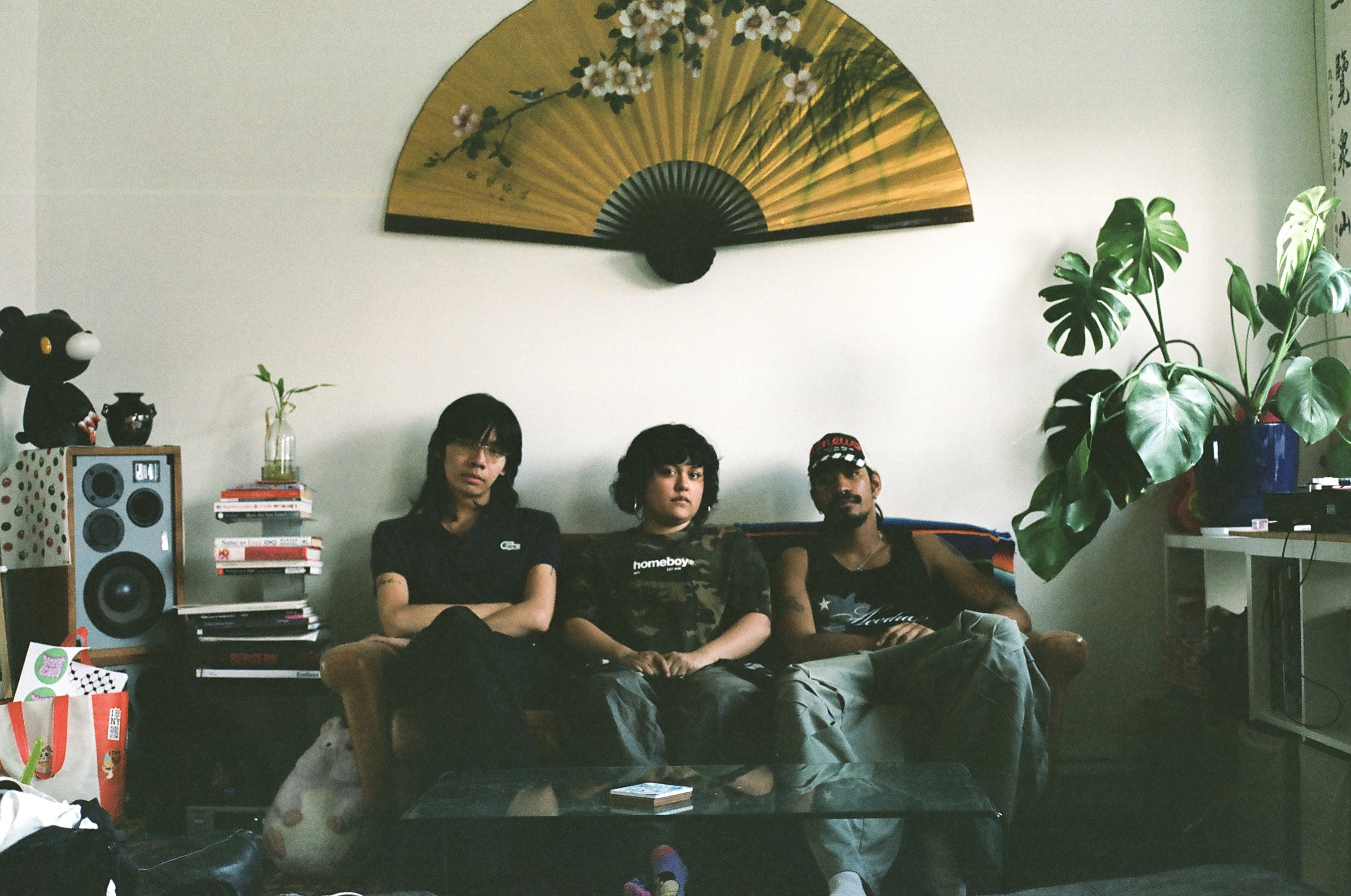
Like my whole real name. It was because people couldn’t find me through my name before. But I kind of like that. It scares me to be online, so I kind of enjoy having a little anonymity. If my coworkers try to look me up, they can't find me, which is cool.
E: I remember the first time seeing your work. I think Isa posted your work on her story or something, and I was like, "I want to interview this person," but I didn't know your name. So I was like, can we interview your friend Mango? She was like, Mango? You mean Reina? And I was like, I don't know their name.
A lot of people actually have called me ‘Dried Mangoes' in person. They're like, " Are you dried mangoes? “ I'm like, yes, I guess. But you could just call me Reina.
E: What was your dad's artist's name?
His artist's name was Marka27.
HOW DID YOU GET INTO ART?
C: So, how would you say you got into art & fashion? You mentioned that your dad was an artist too. Was that mostly how you got into it?
I think so. I mean, I always kind of had a natural gravitation towards art and physical creation. I think I was just born with creativity. But growing up in an environment where my parents were artists and were involved in that world, it kind of subconsciously let me know that that's how life could be, and that I could keep practicing that. So I think that my family definitely influenced me a lot.
E: How did you get into fashion design specifically?
I always looked up to my mom and the way she dressed when I was growing up. Back when we were living on the other side of Brooklyn, she owned a little children's line, and she would do screen-printed onesies and stuff for people. So I think I had kind of an inclination towards fashion. I was always stealing her clothes, and she would dress me up in all the Harajuku lovers stuff. And then, when I went to high school, I went to an art school in the city called Art and Design, and I actually went into animation because I love toys and cartoons. Like that's my whole world. Then I spent a year there, and I hated it. I hated it so much. I just couldn't, my brain couldn't think that way. So I switched to fashion at my school, and I've been doing that ever since.
E: Did you pick up the skill in high school?
Kind of. But in high school, we just learned on a home machine. So it wasn't really anything.
E: Not like a Juki, right?
Yeah. Nothing like that. But it definitely got me into the practice of designing.
C: So was there a certain moment throughout your life where there was some sort of profound realization? When did you realize that this was something you really wanted to pursue?
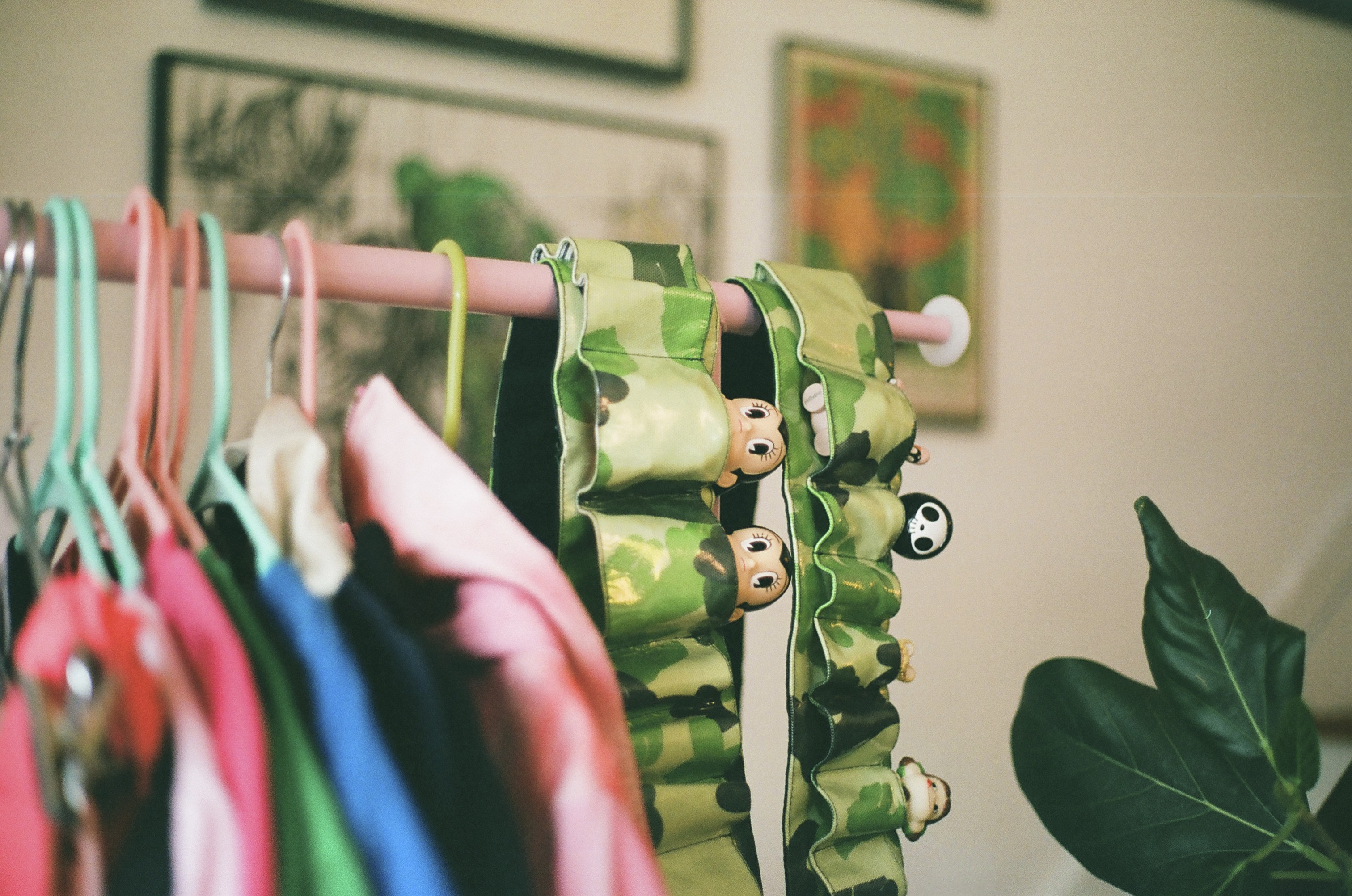
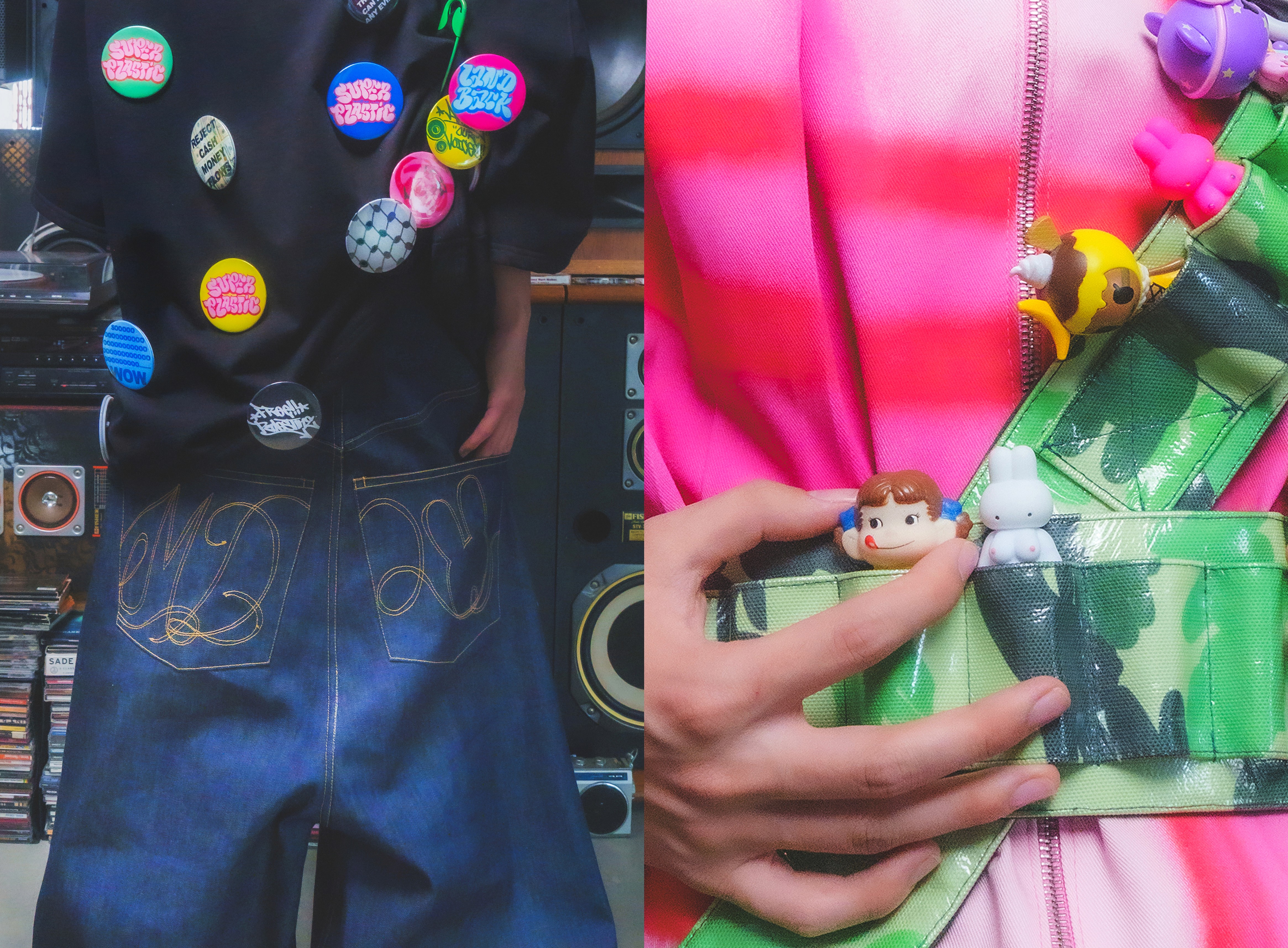
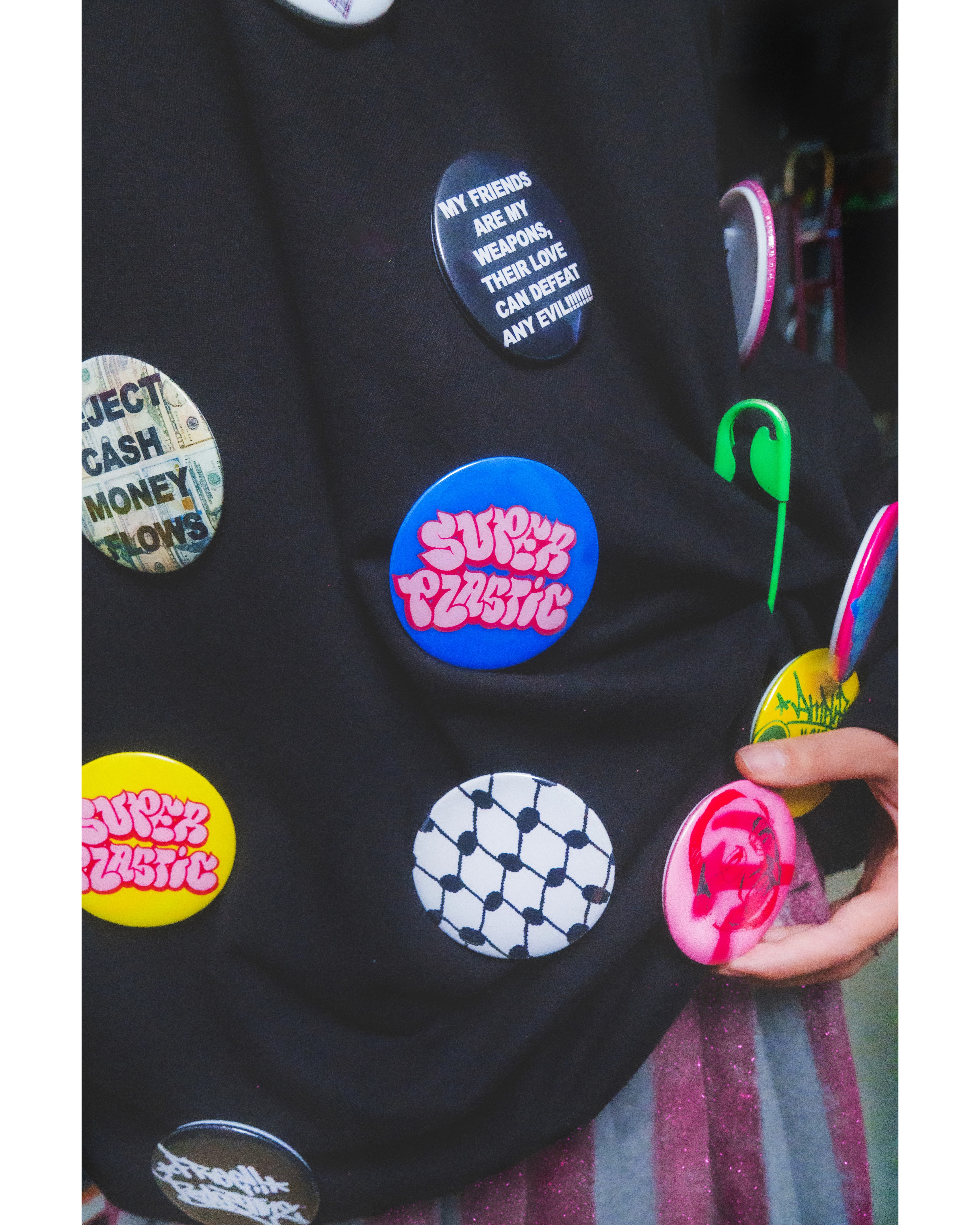
I think it was actually almost the opposite. In my junior year of school, I almost dropped out, and I'm not a quitter. I've always been raised to be academically rigorous and see things through. There was an effort to get my university to divest from companies that were contributing to the genocide in Gaza.And honestly, being in the fashion bubble at Parsons, I low-key felt like I was surrounded by evil sometimes. I felt a general lack of empathy amongst a lot of my peers and professors. I was so frustrated I couldn't motivate myself to work. Going into making my collection (“i’m alive and i love you”), which is what I worked on through the entirety of my senior year, I told my professor on the first day that my heart wasn’t in it. I felt like there were more important things to do than designing clothes. But she was like ‘Then just do what you think is important, and do what makes you happy and what makes you fulfilled.’ and that's when I started making all the buttons and shit like that. I wanted to make it my mode of being able to to tell a story and share a message. I’ve been doing that since and that's kind of what motivates the pieces that I’ve been putting out. Also a lot of the pieces that I put out are for fundraising as well.
E: I like that answer, it’s the reality of becoming jaded with something you love.
C: I'm hearing that. I was going to say, you're giving us the ups and downs of a fashion school in your journey. Do you believe it was necessary for you to go to Parsons to further your artist journey, or is it something you could have done without?
I think it was important for me to be exposed to a different world of people. Especially growing up in New York I didn't really feel like I would have a big shift going into college because I was already pretty independent and I went to an art school. But there was a really big culture shock in terms of the people in my community. I felt I couldn't relate to a lot of them and so I think seeing that was helpful in learning how to navigate putting out work while making an impact among that kind of community because it's very hard to do.I took a lot of courses that helped me expand past my background in decolonization. Learning more about indigenous lands and the violence that has occurred and even now continues to occur, that's what a lot of my thesis was rooted in. My design process has always been really centered in world-building, so my time in school kind of helped me connect the dots and the why’s. At the time I was reading a lot about Indigenous ecologies and reimagining how that could exist now or in five thousand years like what it might look like. I read a lot and I learned a lot and it kind of opened my world a little bit. It kind of made me realize what I cared about, but I also think it is important to learn in general.
STARTING THE BRAND
C: Let's start talking about the brand. How did the brand come about?
My brand's name is Mourning Dreaming. The name is a double entendre because it kind of just sounds like morning like when you wake up in the morning dreaming but it's spelled like the word mourning. It is actually inspired by a text that I read by a Hawaiian decolonial activist named Poka Laenui called “Processes of Decolonization”. He describes Mourning and Dreaming as two stages that someone of a colonized culture faces. Like mourning the history and the land and everything that is lost of our ancestors and then dreaming of what could be. A lot of my work kind of lives in that space of the in between the mourning and the dreaming and asking how does that translate physically. From the things we wear to the things we collect and the things we love.
C: That's fire, but you also just recently did an accessories drop mixed with some pieces. How was that process?
That was born out of you know life after post grad, it's just so hard. Literally all my roommates talk about is how hard it is to find a job in the industry right out of school. I kind of made that because right now I don’t have the resources to make a full collection and be in the studio. I don't even have a studio to do pattern making and sewing on a Juki. Still, I needed to do something for myself since I spent months literally doing the LinkedIn death stare. It was getting to my soul and so I needed to channel that into something else. The first idea that came was actually the shirts. I made the “ Every single I.C.E agent I've ever seen is chopped” shirts because literally just one day I was mad and I was ranting to myself and I said that and I wrote it down because it was true. I saw a really awful video of them and I was like bro, why is every single one like the ugliest person I've ever seen.
E: Bro did you see the Asian one with the crazy side bang?
C: Yeah, that shit is crazy.
It's an automatic swag drop, but yeah, so I wanted to make something that I could fundraise with. I was inspired by a lot of my friends who kind of do similar things.
E: I mean, you talk a lot about how much of your work is tied to a community. How do you cultivate your community?
I love this question because I think especially among people that didn't grow up here in New York. I find a lot of my peers struggling right now, transitioning into adulthood and not feeling that sense of community. I think it's important to just get out and talk to people just for the sake of talking to people and saying hi and being kind. That can go a very long way, you know I live in Bushwick right now but I didn't grow up here. I've lived in East New York before that for five years and it goes a long way to just say hi to your neighbors and learn their names. Learn how to say some things in Spanish if you live in a neighborhood where most people speak Spanish. Through doing that I've met a lot of people that are now some of my closest friends, because you know we throw functions together. Right now actually with my current work, I've been thinking a lot about parties as a third space mimicking indigenous ways of gathering. I think again, verbal storytelling and verbal history that's something that's super important. Anything to get us out from behind our phones and out from our apartments. People who come here to the city to work and to follow their dreams but then they go to work and then they come right back to their apartment and they go to sleep. How are you in New York and not meeting people?
E: I guess in the same vein of that, you did just have an event recently. How was it seeing the community you cultivated show out for you?
I was very happy, very grateful. Actually that came to be because I had gone to an event that was hosted by a local vinyl DJ, named Diosa Dynamite and after her event I walked up to her and just introduced myself. I told her about myself and she ended up seeing my work and saying that we needed to throw something together. I felt really lucky because she brings her own community. My friends also showed up so it was kind of a melding together.
E: That's what it's all about!
C: That's what it is really all about, though, especially in this day and age, where like everything is online, seeing it physically is just like it's an experience that you can't even put into words.
She does an announcement during her sets where she's like, if you want to know the song I'm playing, don't pull out Shazam, just walk up to me and ask me. That's why I'm here being a DJ, if you want to Shazam then listen to a playlist. Even that, it's just a small part of like..little things people coming into the city should kind of take into account in terms of being in these spaces as a way to build their own community as well.
C: You mentioned that the most recent collection came about because you didn't have the resources to produce a full collection of clothing and whatnot. So, how is it being creative and still working within freelance jobs, because I've seen you work at Fried Rice shop as a design assistant.
E: Oh, for real? Like fried rice? Like the food?
C: Fried Rice, the clothing brand.
E: Oh, I was hungry, bro. I was about to ask Is it good? Do you like menu design?
C: Reina was a chef, though.
Hahah, how did you know that?
C: Research. But anyways, how is that balancing being creative and also working?
I think that's definitely the thing that I've struggled with the most, just because you know, I'm here living in this apartment, supporting myself. I'm very privileged to also have my family in the city whenever they can be. Also my roommates also helped me take out the trash, even before this interview. Thank you, guys.
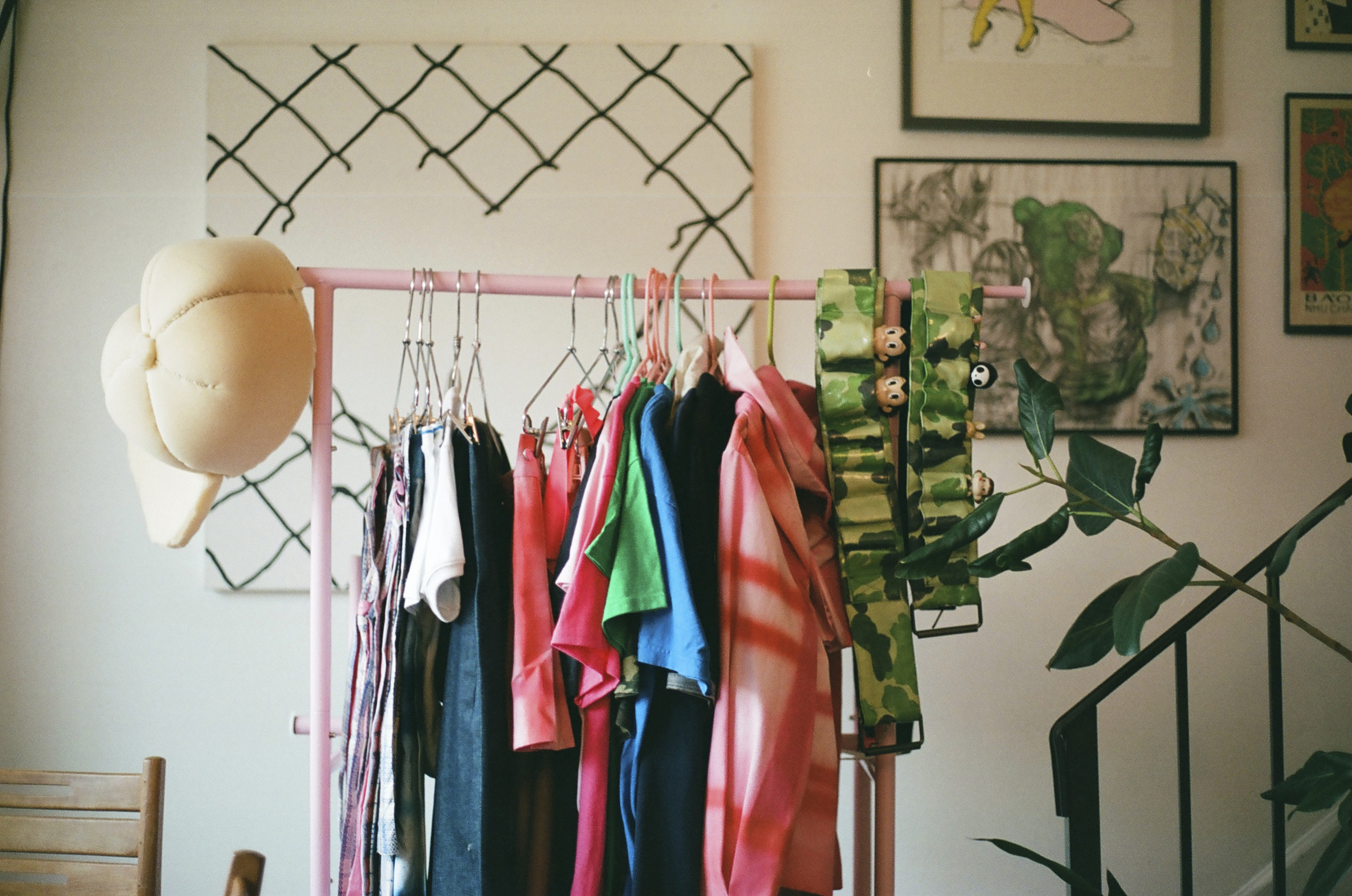
E: But what does Ranelle do?
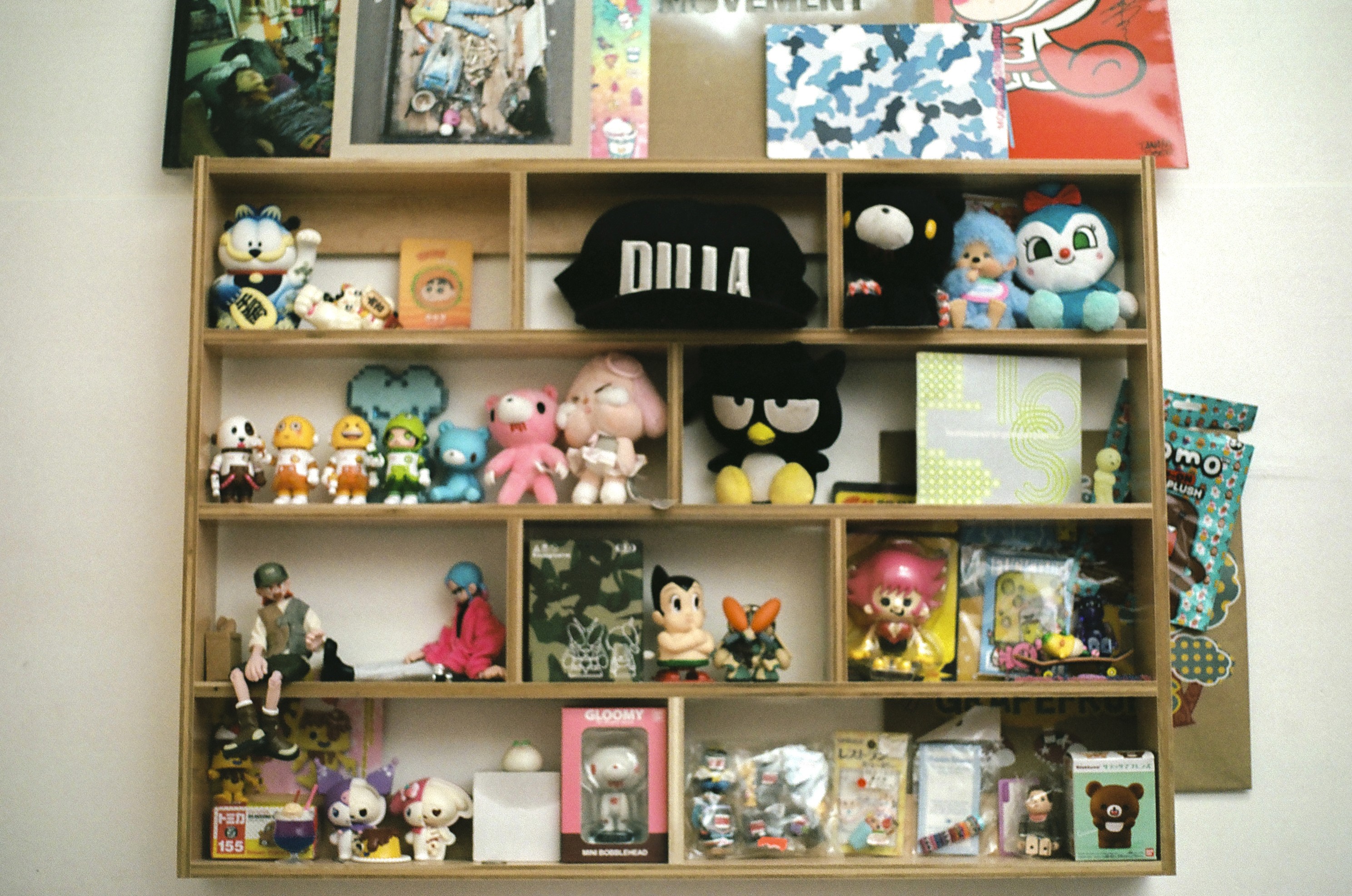
Haha… Anyway, it's very difficult. I would say, especially working in a job that is similar to what I do in my own work because it's hard not to put a lot of myself into it. It's also hard to, I wouldn't say separate it from my own work because it's very different. Because everything I make, there's like a reason behind it, but at the same time, there's only so much time in the day. I also work at Toy Tokyo. I've been working there for the past four years. So, I'm a super senior over there…yeah, I grew up going to the store too. Even though it's just like a part-time retail gig, it's actually kind of rewarding for me to be there. I think I've also built a lot of community while I was working there, too. Literally, by just being behind the counter and meeting people. Some of them are the dopest artists that I'm friends with today. Literally just met them because they were buying some blind boxes or some shit there.
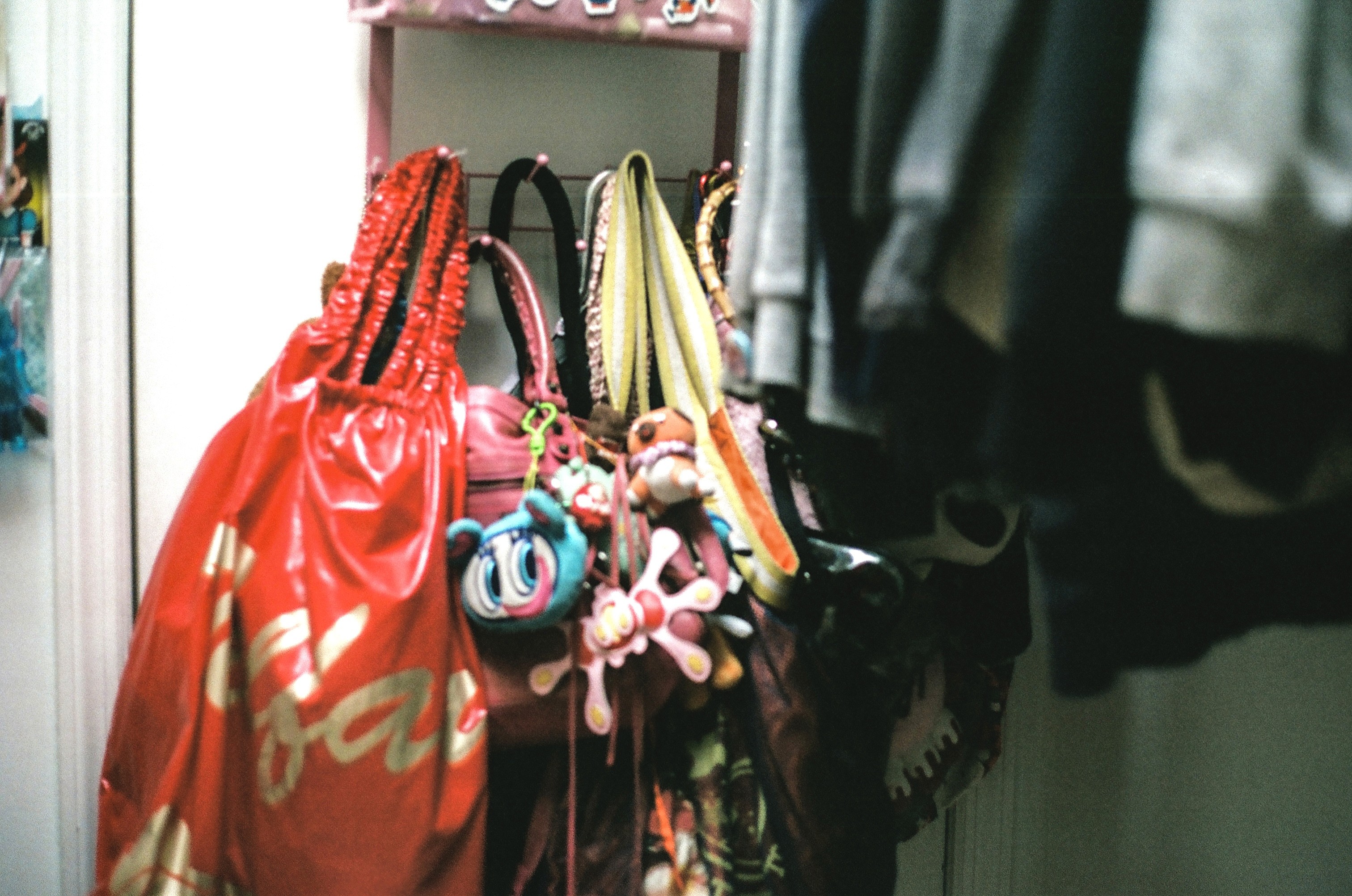
C: What's the top seller?
What's the top seller? At Toy Tokyo? Dude, it's unfortunately the Sonny Angel.
C: Still?
Still the Sonny Angel. Like, yeah, yeah. That's all I'll say about that.
E: Are they hiring or not?
Hey, um.
C: I need another job.
Drop off your resume.
E: Me too, though. Let me know if they're hiring anywhere.
C: Actually, audience, everyone open job call, hire me as well, audience. We'll drop portfolio resumes.
E: In the interview, I'm gonna make my name blue so you can just click it, it goes right to my resume.
Yeah, it's tough out here.
E: Shit, I will work for pennies. Let's talk about money a little bit with the commercialization of your work, because it’s predominately for fundraising. But also at the end of the day, you gotta eat too.
For sure.
E: Is it hard for you to properly charge for work?
That's also why I started off with this little capsule because a good chunk of my ready-to-wear stuff would definitely be super inaccessible. I kind of feel bad. I know I shouldn't feel bad as an artist but I feel like we all struggle with pricing our work with what it's worth. Especially with the amount of hours that go into the labor and everything because at this point I’m making everything on my own. So I wanted to make something that I could just bang out and also I think the fundraising aspect came kind of naturally because I wouldn't want to sell things that are based on people's experiences without it being for a purpose. So like some of my more fun stuff like the joint clips and things like that, I can do that for myself. The button blind bags and things like that I'll put the money towards myself. I think the other things that come naturally make a balance between the two.
You know a lot of people have been asking me like, ‘So is it worth it? Like are you making it all back?’ and I'm like no, honestly I'm not I'm not making it back but like it's rewarding for me because I'm putting something out there and now people have it. If I didn't do that it would be the same and it would be the same amount of time passed with me not doing anything and not having anything out and I wouldn't have made money and I wouldn't have lost money. I’m just taking it one step at a time but it makes me happy that people are responding to it and that's all I can ask for.
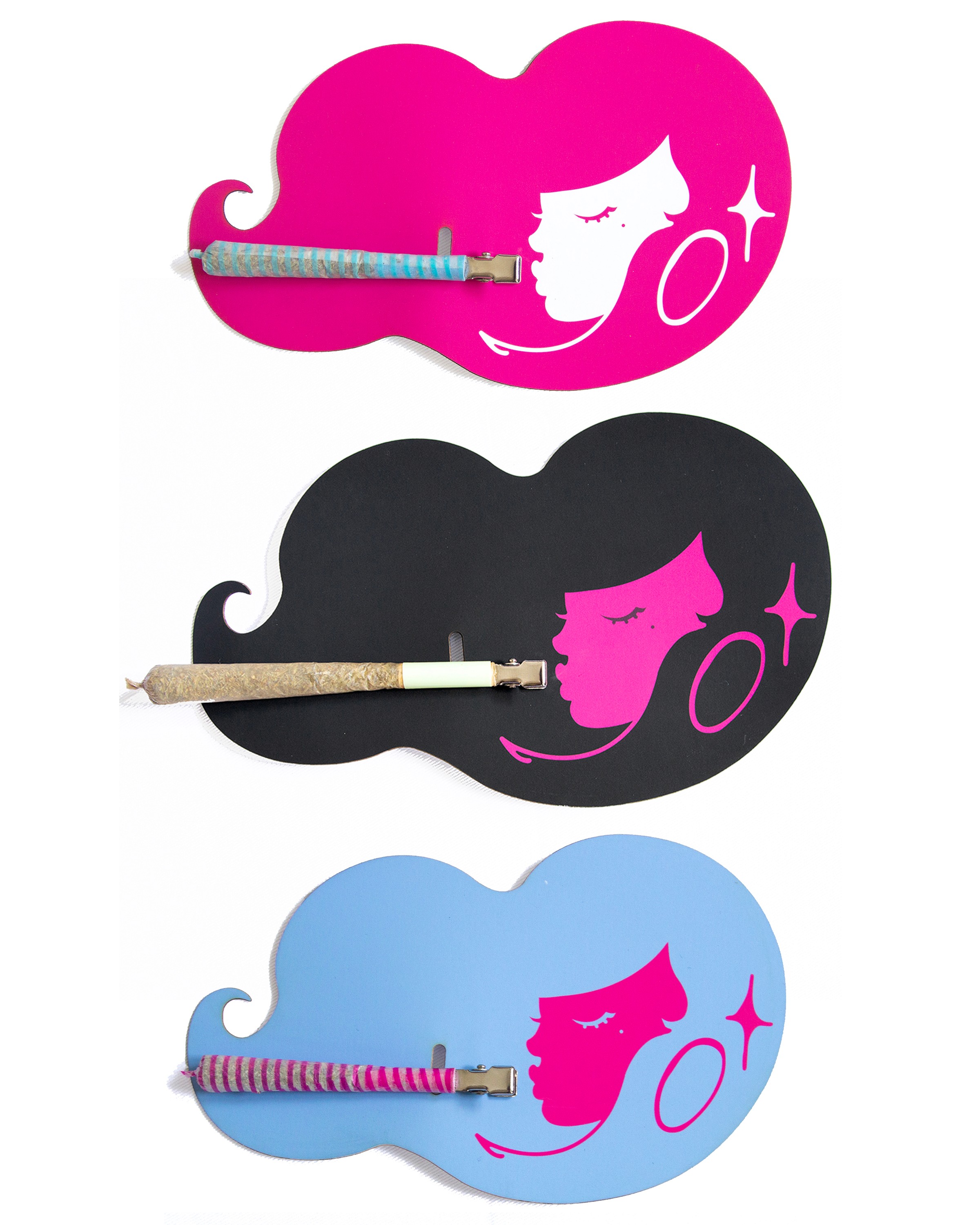
C: Also like for this type of stuff it's not always about the monetary gain you get. It's also about the fulfillment you get. We unfortunately make no money, like we lose so much money but it's not even about that, we don't care about that. We build a community around it, we have fun together and those things are so much more rewarding than getting a couple bucks.
Yeah, y'all get it.
E: Even on the street it’s like two people that don't know each other could see that they're both wearing Acedia shirts and understand that they're part of some sort of greater community that's connected to us. Maybe they don't know each other directly, but it invites conversation.
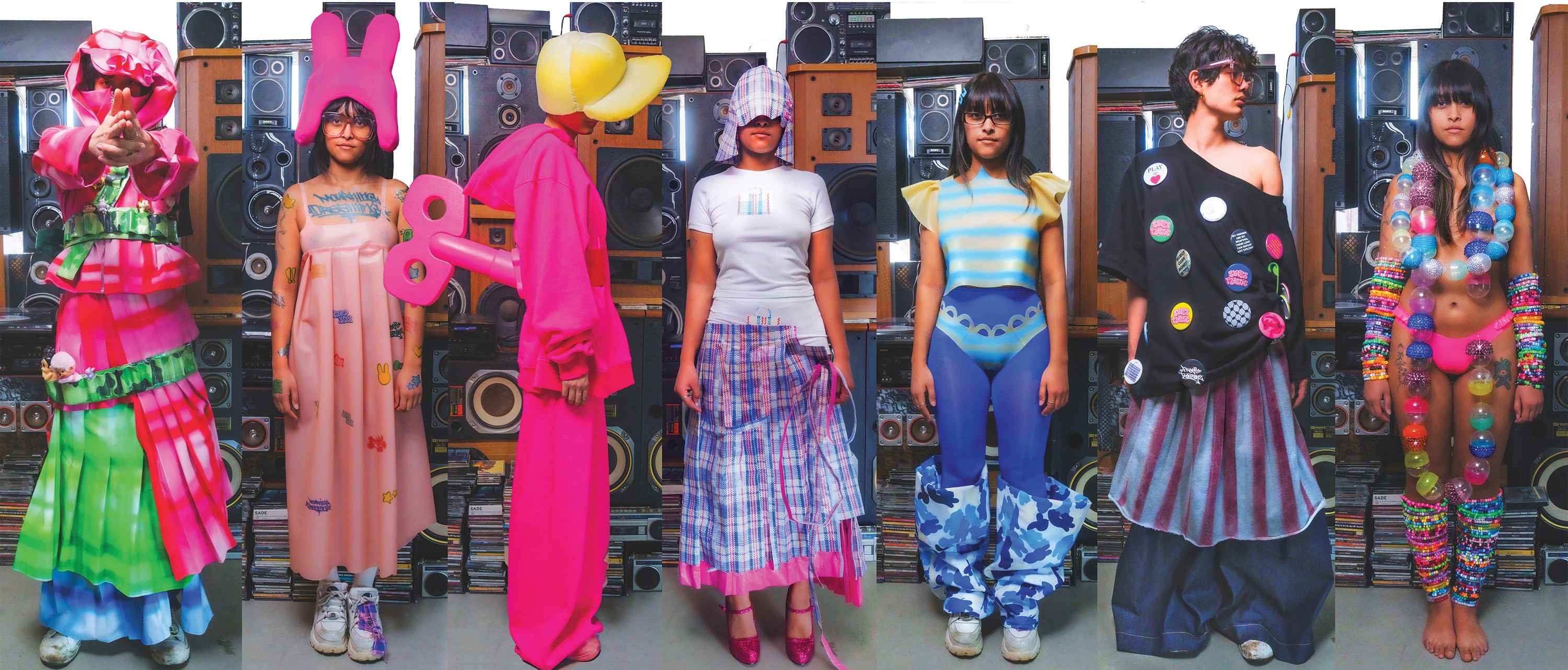
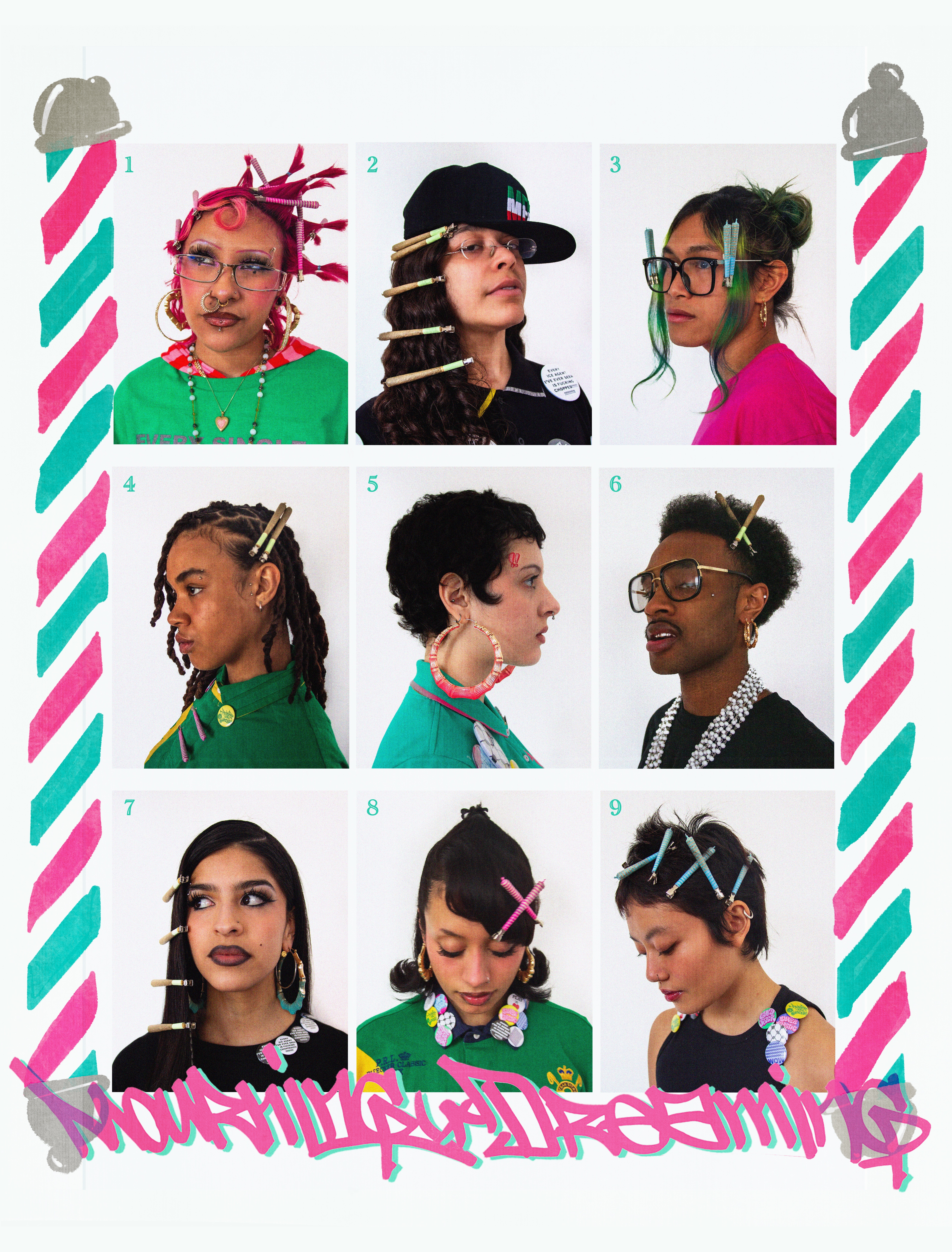
Yes, that also goes back to another part of it, which is another way of framing the question you're asking: how do I cultivate this community? For my last shoot for the clips I put out, I mainly used Native New Yorkers as models. I did the whole shoot here in my living room. For two days, everything was a hot mess. I had this backdrop set up over here, and then I just had people come, and I made food for them, my best friend helped me as well, a lot, but they all met each other–
E: What food did you make?
We had some guac, some agua de jamaica, some fresh jamaica, you know, for all the Mexican baddies that were coming through my place.
C: Shout out.
Shout out.
C: Shout out to the Mexicans, bro.
Queens get the money. But yeah, it was also really nice to see all of these people that I only kind of knew, interacting and meeting each other, and now like knowing each other because of that. So I think that's another part of it for sure, like you guys were saying.
C: That's beautiful.
E: How can we submit our modeling resume, though?
C: I'm kinda hungry right now. I'm just kidding. I'm kidding.
E: What's that jicama? Was it jicama you said?
C: My mom doesn't let me have those.
E: My mom never let me have that. Ever. I never got a nibble of that.
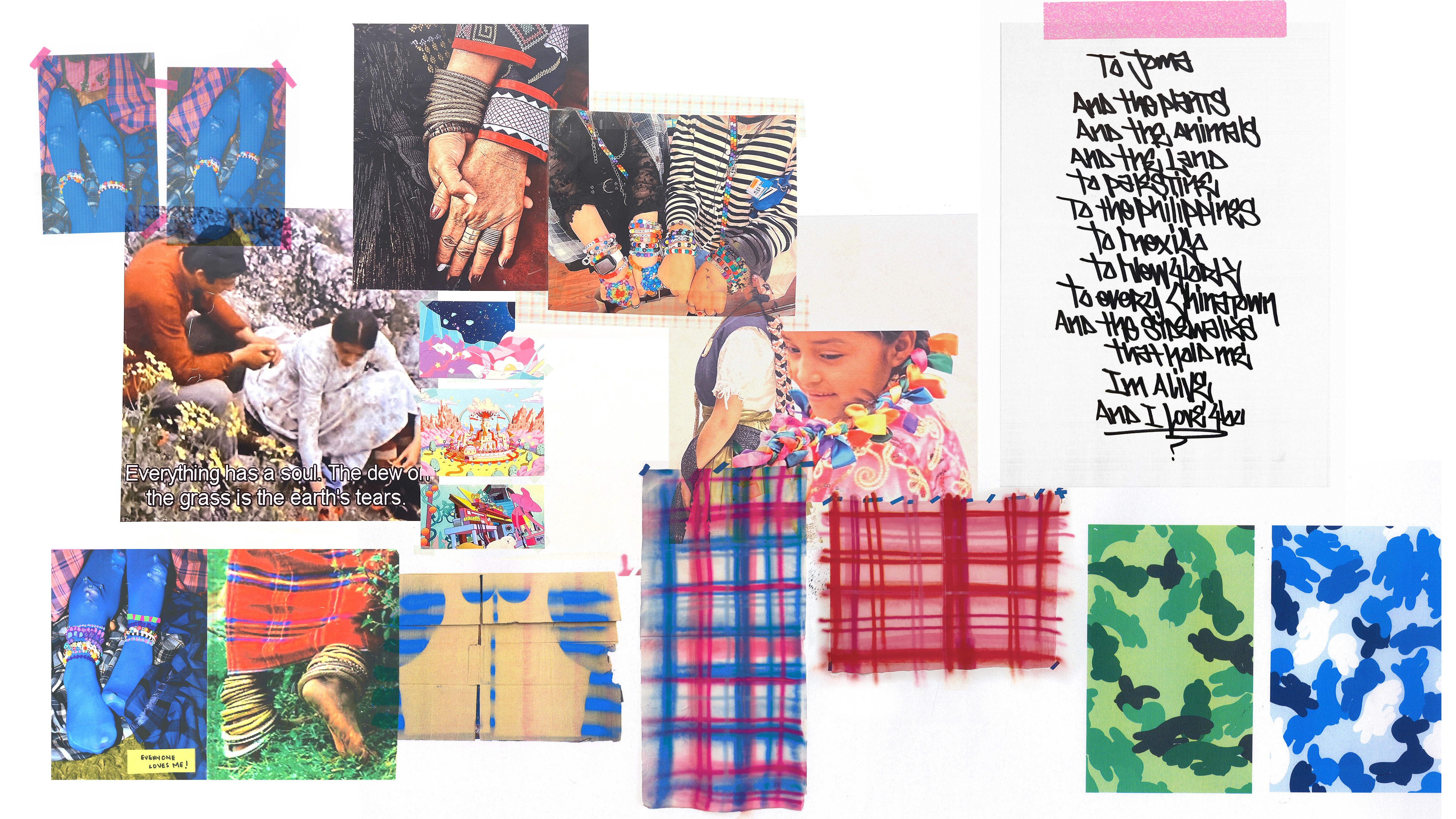
C: For your Parsons collections, ‘I'm alive, and I love you.’ Talk a little bit about that design process. What was your inspiration behind building that whole collection?
Yes, totally. So, in general, this is the advice I give everyone in school for art or fashion. I became such a better designer when I just started doing shit because I liked it. Because if you like doing something, there's gonna be a reason why. You can figure that out later. I think a lot of that just comes with caring about your work. So a lot of that collection just came from the things I love. The first day we began thinking about our collections, my professors had us bring in a little museum of objects from our house. I was thinking about how I was going to build this world that the collection lived in, andI started realizing that all the things I have are kind of what I am. At the same time, I was still thinking about my community. I was reading a lot about indigenous ecologies and the connection between land and magic and belonging. The way that we are meant to treat the land and the animals and the things surrounding us. How everything is alive, the grass is alive, and if you love the grass, it'll love you too, that's kind of where it started.
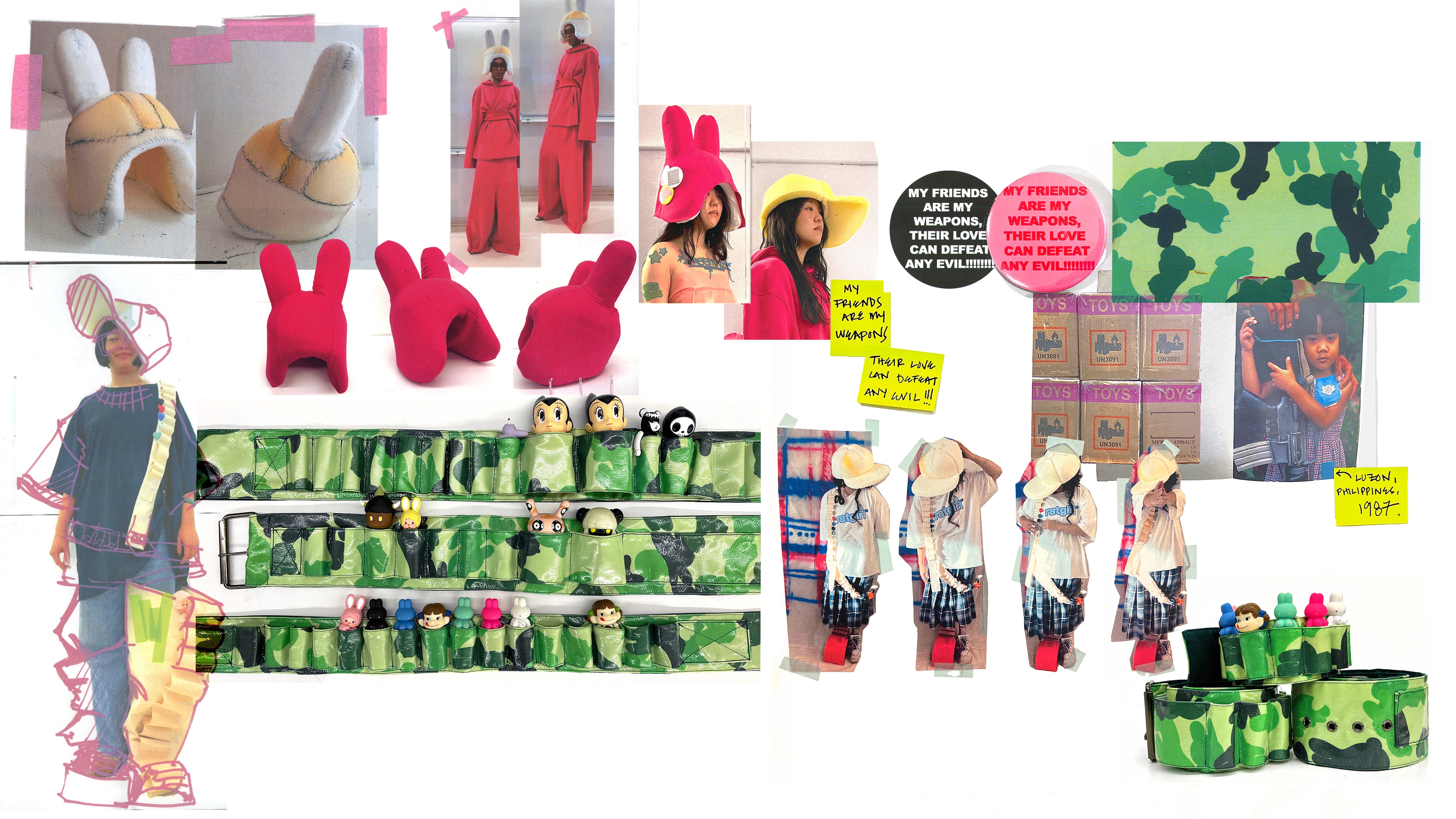
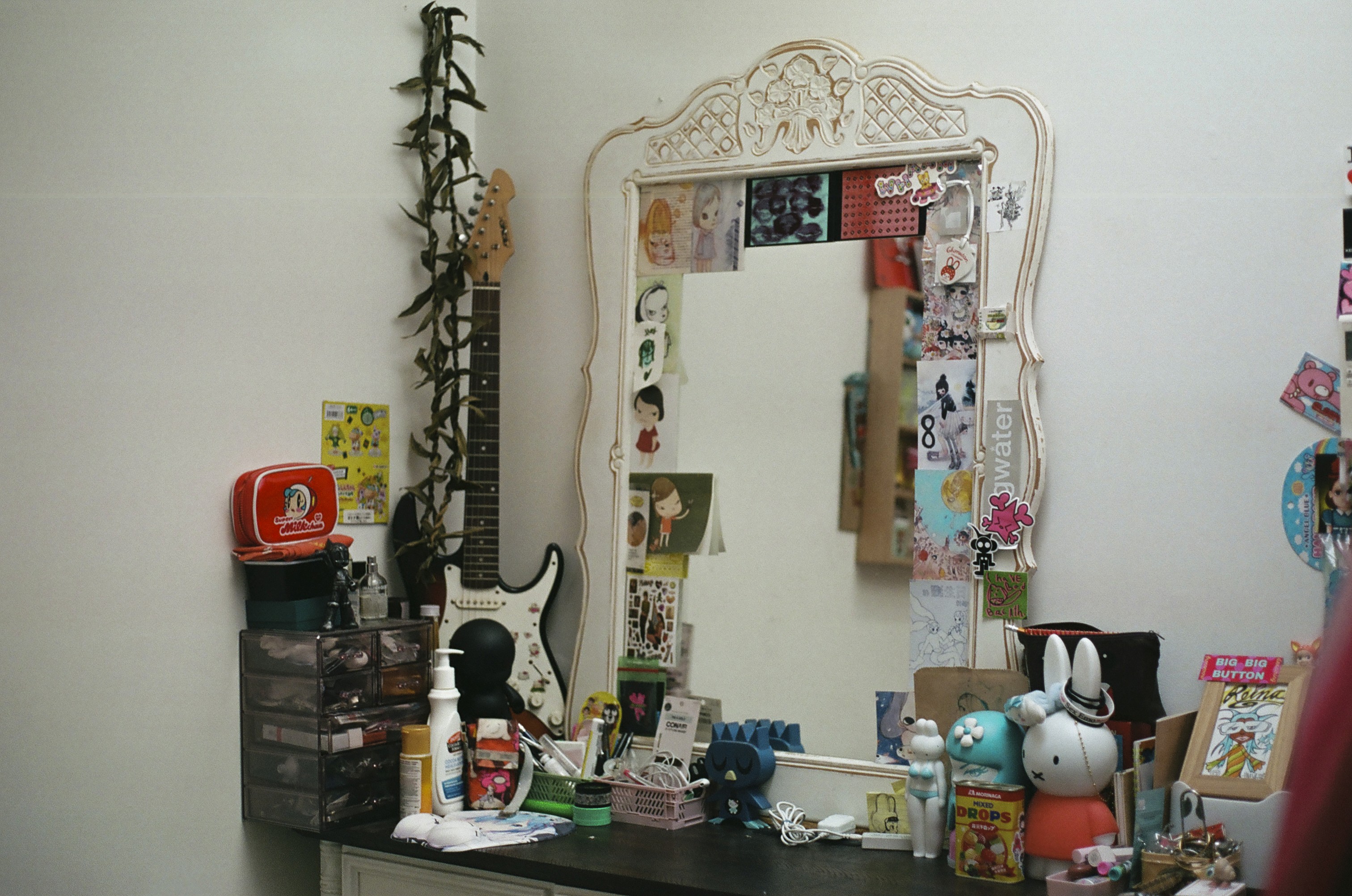
So I was looking around my environment, and like, I love toys, and I collect so many. I grew up with a dad who collects, so I was just thinking about that as a foundation for the world I wanted to build, the idea of play, and how it kind of perfectly reflects on indigenous methodologies of care. It goes very deep. But that materialized into making a lot of fun, like “larger than life”things, like I made a huge 3D wind-up key.
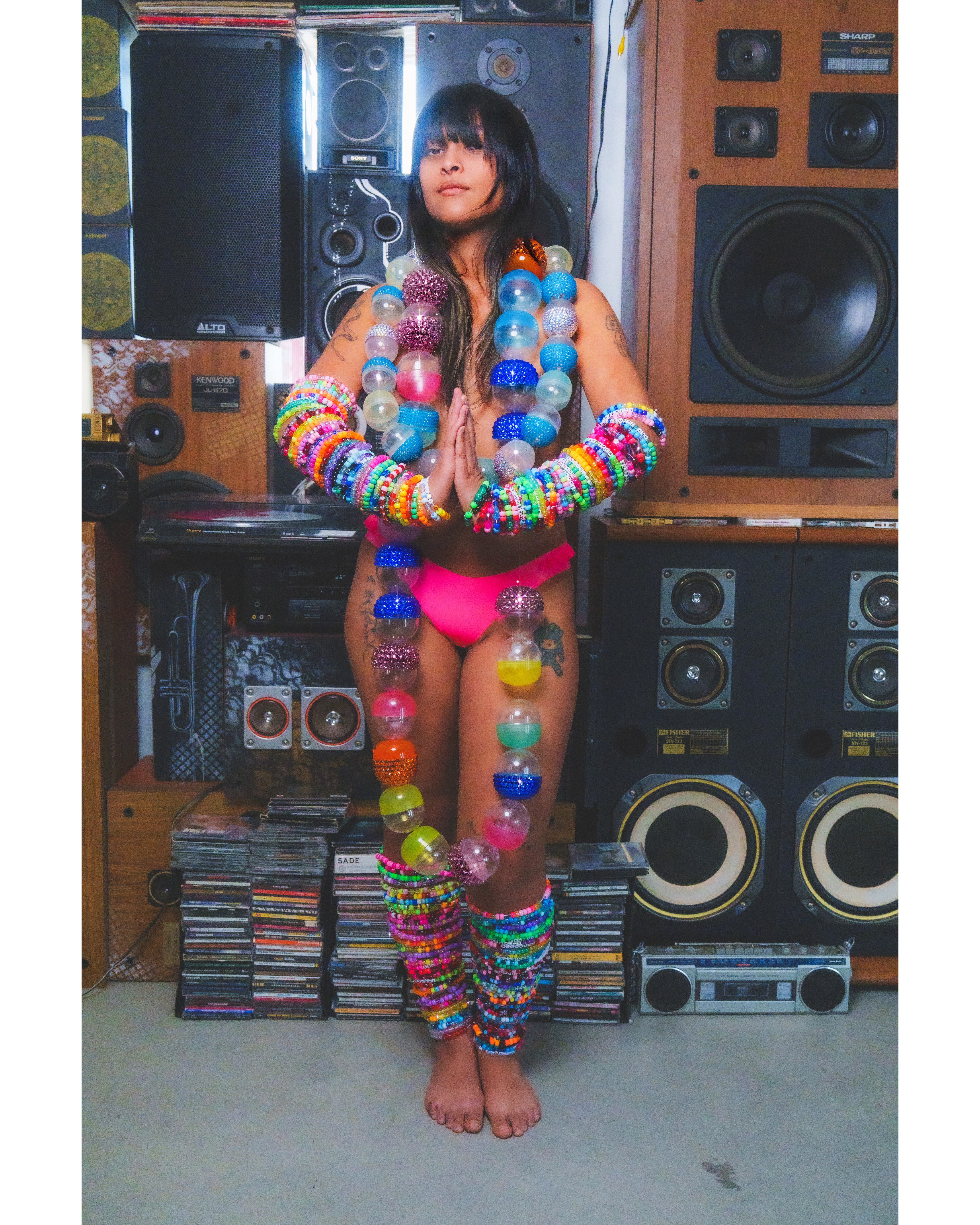
Another part of that was that I wanted to make things meant to be shared or gifted. My little sister helped me make hundreds of little kandi– like friendship bracelets. That was because I wanted a look made up of things that you could just take off and give to someone else. That was also inspired by customers who came in at Toy Tokyo, there were two sisters that had a bunch of bracelets they made themselves. I posted a picture of them on my Instagram when I first started designing that collection. It was even the same with the buttons I just released, l wanted a shirt just totally covered in buttons because I would imagine meeting someone and giving them a button straight from my body. That whole look was inspired by my friend Taysha.
C: How much of your identity goes into your work? You did mention you're a big fan of toys, and that's reflected in your work, oh also are you full Filipino?
I'm Filipino and Mexican.
C: So how much of either identities go into your work?
Yeah, for sure. I would say a lot of it, almost all of my work kind of depends on that. Just because a lot of it is coming from my experience, growing up here in the U.S as a Mexican Filipino, child of immigrants. They’re two very, very highly colonized cultures that are still physically and spiritually affected by that colonization today. Like, very badly. So, in my sophomore year of school, I was actually reading a book called The Babaylan, which was about how, in the indigenous Philippines or the pre-colonial Philippines, it was actually matriarchal, and the author was talking about this imaginary female warrior who always lived in her head. I was thinking about all of my work, and I realized all I draw is like, these like, robot girls that live in this imaginary place where only they exist. They only have to worry about themselves. So I was like, yo, that shit is literally intrinsic. Because that's just how my life was supposed to be. The same thing with Mexico. I guess what I've been doing now a lot is kind of honing in on those people and their experiences here in New York. I've been pretty inspired by my friends and the people I spend time with, who also have similar experiences to mine. So, yeah, I would say it definitely plays a big part in my work for sure.
C: Yeah, because I recognize, I was like, you do a lot of plaid and patterns. I was like, this looks a little bit familiar. I'm also half Filipino.
Oh, period.
C: My mom would like to tell me about the Blaan people. And I was going through your Instagram, and I liked all these pictures. I'm like, there's got to be some Filipino shit.
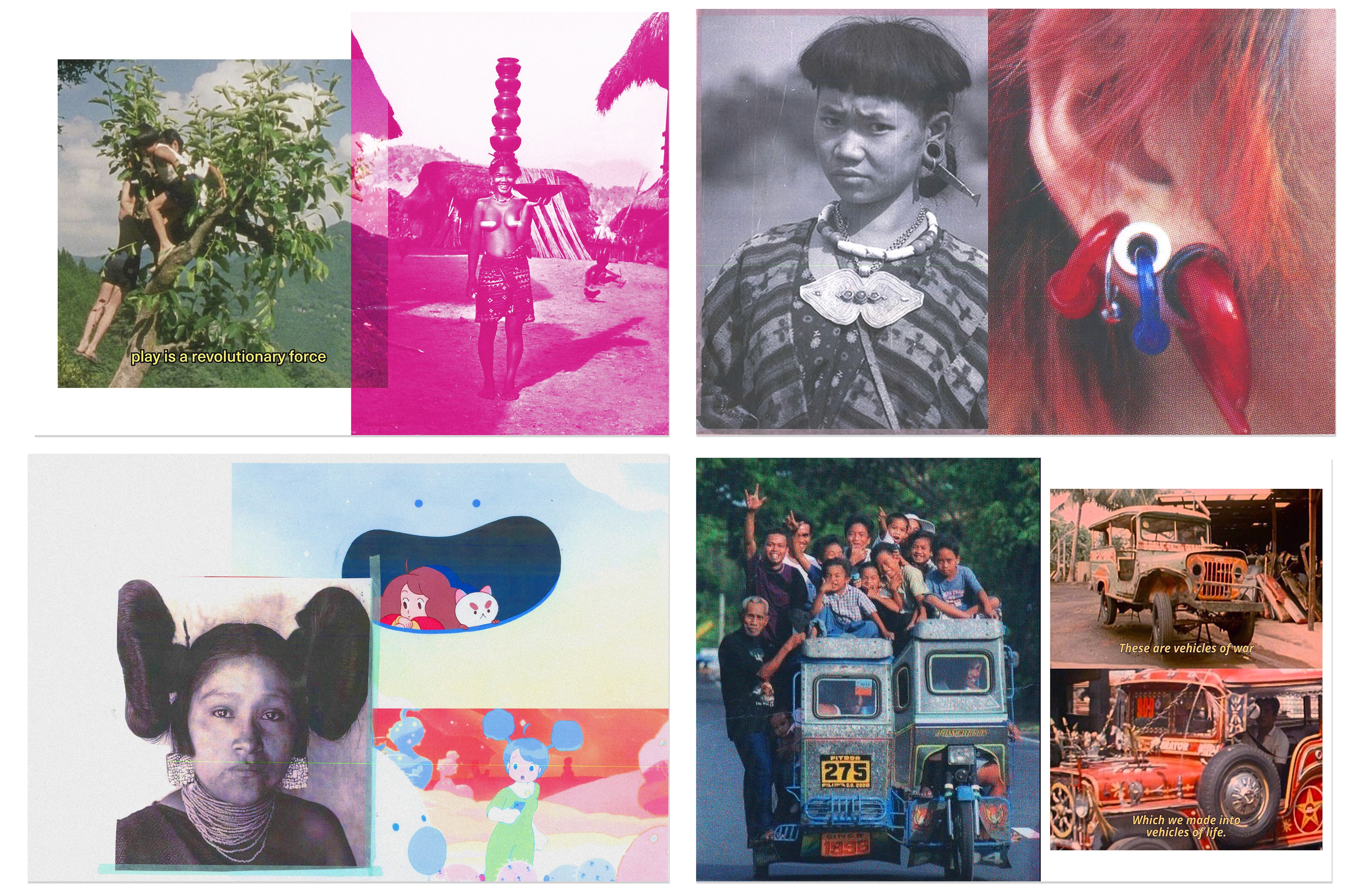
Then also, a lot of my visual research honestly, like, I was kind of a little nervous going into this because I hate talking. I feel like I can express myself so much more through imagery, which obviously makes sense, we're all like artists. But I was finding a lot of connections, between a lot of the cartoons and that visual imagery that I love and that I grew up loving. Also specifically, like native Mexicans who are really just indigenous people to the Americas as well as, like, indigenous Filipinos, there's a lot of literal visual translation between the two. So I love playing with that in-between space, making all of the headgear that are like little animals. That was a reference to indigenous cultures as well. I can also talk more about Parsons. I guess one other thing Parsons did was reignite my love for hip hop. Like, as a community, like, not just as a genre of music. I still fuck with both for sure, one doesn’t exist without the other.
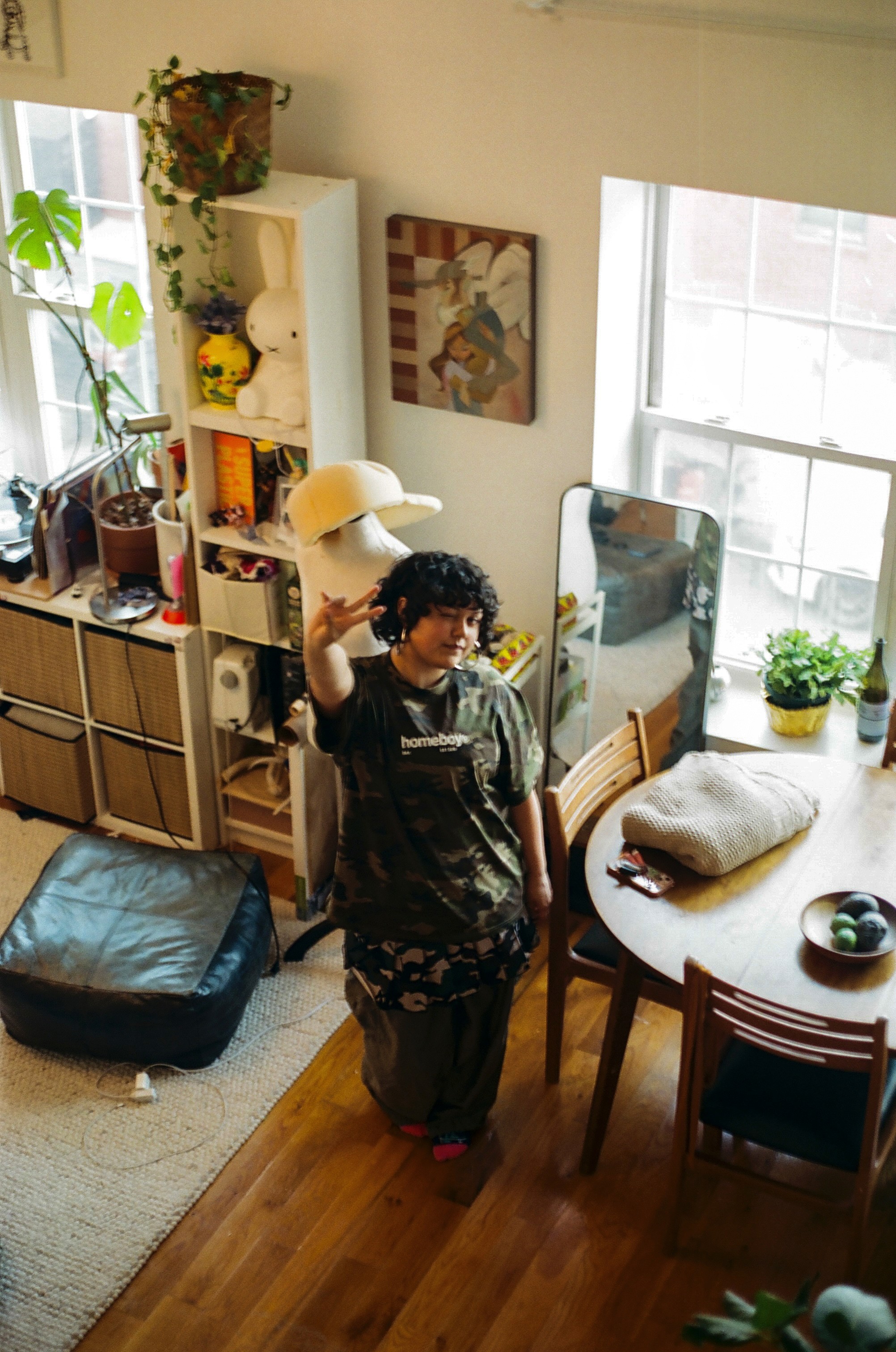
C: Well, who's your favorite artist right now in terms of that?
Yeah... Shit.
C: Drake?
Oh, hell no.. I'-
E: Post Malone?
Like a lot of my favorite artists right now are people that I know in New York, like my coworkers Flo Kennedy and Po’Edik are really just doing it all themselves, I think that’s the truest way. I grew up in hip hop because my dad was a graffiti artist. I was out at a lot of park jams, my mom was a dancer too, so, like, I grew up in the cypher. While people were painting the wall and breaking in the circle and shit like that. Because they were also young parents, they would take me to all of the free Prospect Park concerts growing up as well.
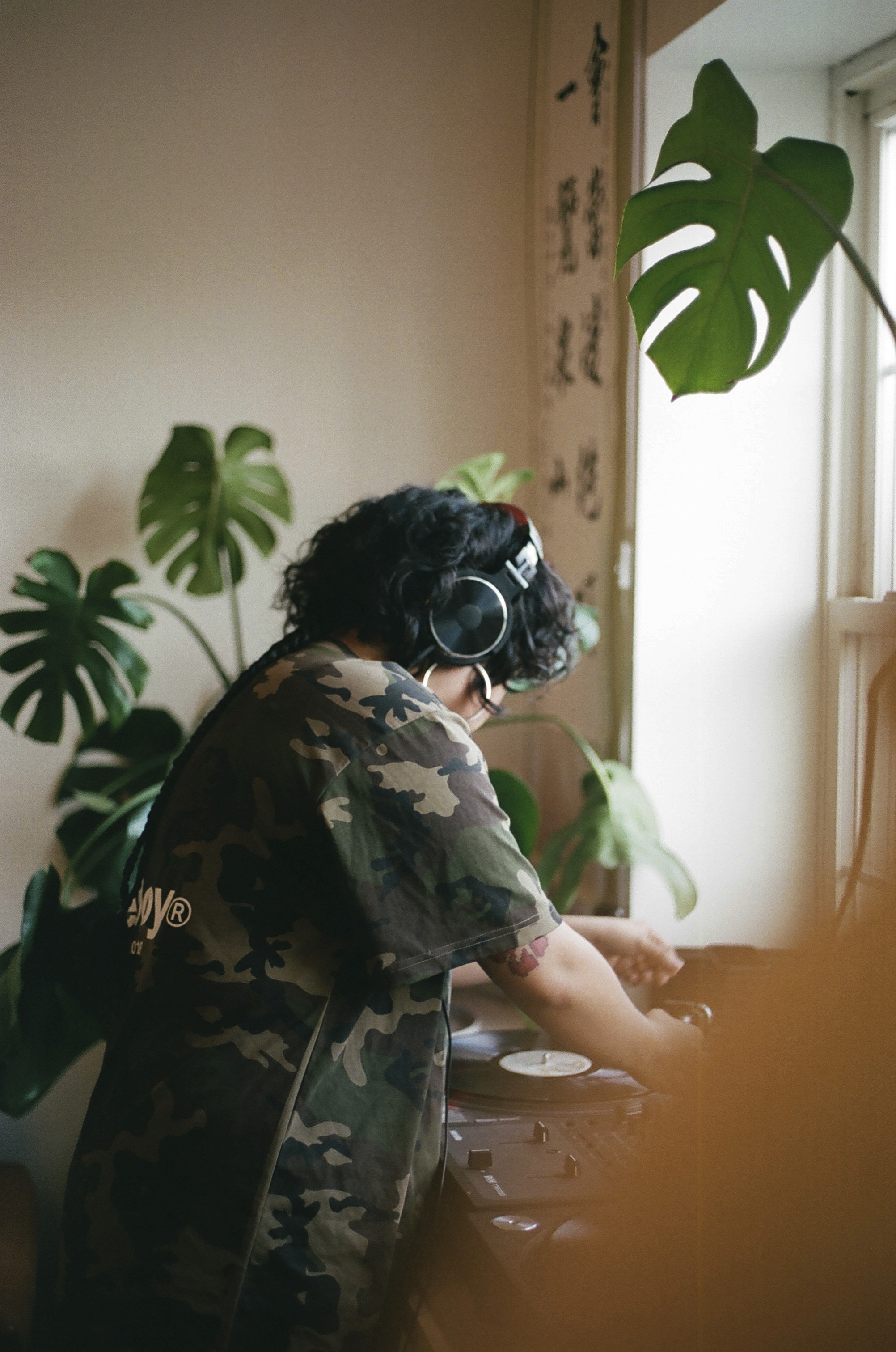
Then once I was at Parsons, it sounds a little silly, but they actually have DJ classes there. It sounds so random, but my professor there, his name's Sam Sellers, he's an OG battle rapper and vinyl DJ from New York. He low-key took me under his wing. When I started taking a lot of his non- DJ classes, he taught about hip hop as a pedagogy, and I found myself relating to it a lot because of my childhood. Like how the pillars of hip hop are very similar to the pillars of decolonization, and again, it's all because it's all about community. So that was another thing that I took out of Parsons, I guess. Like, I met a lot of my DJ friends. I started by learning how to spin vinyl. My professor gave me that mixer because he believed in me.
C: What was your professor's name again?
His name's Sam Sellers.
C: Damn, Shout out to Sam Sellers.
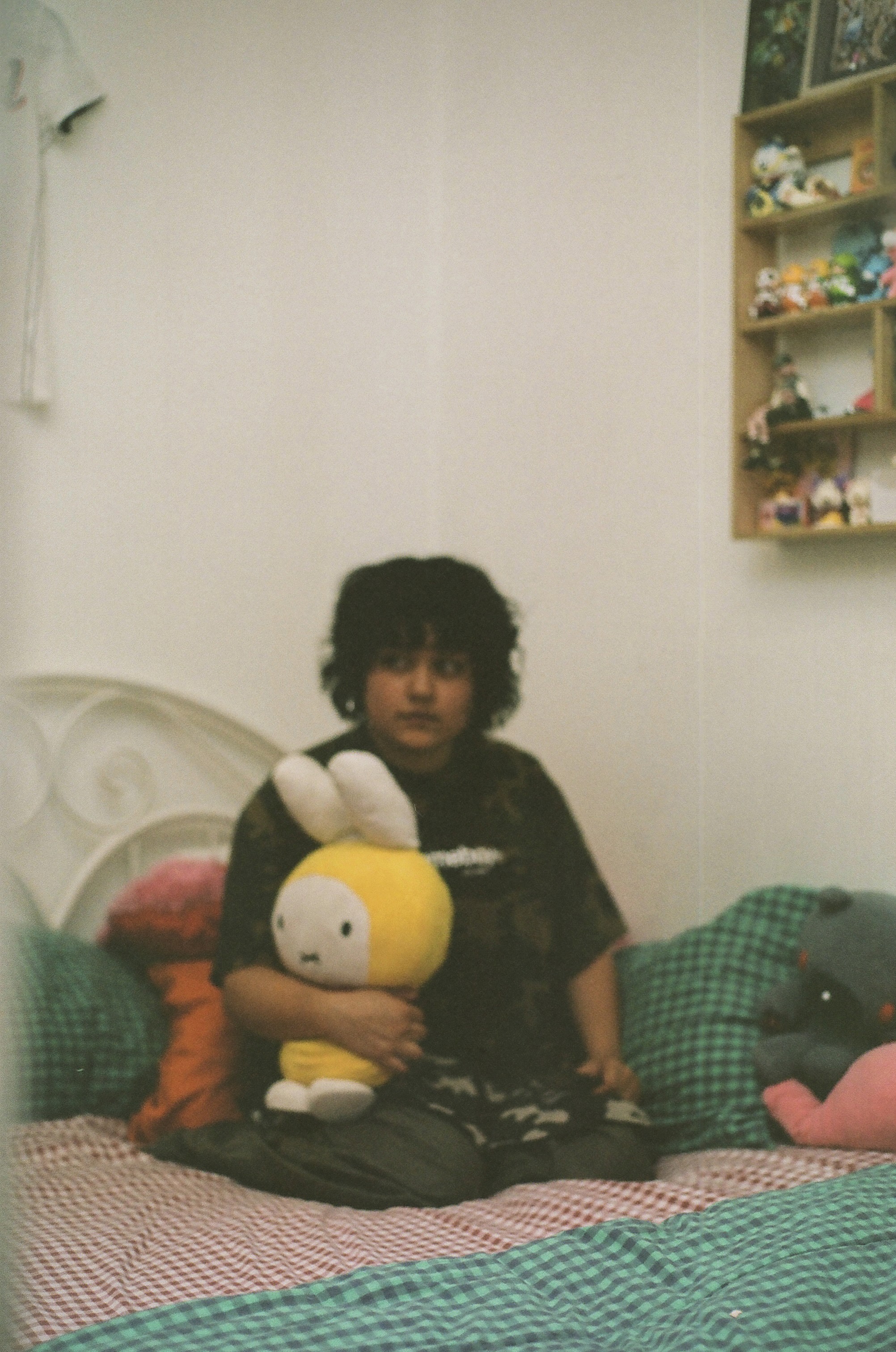
C: Let's ask one more. Actually, let's ask a couple of quick fun ones. What's your favorite cartoon?
Bee and Puppycat. Or, it's a close second to Adventure Time.
C: Good one. Thoughts on Fiona and Cake?
I love it. I haven't watched the new season because I'm scared. I don't want to finish it because I get too attached.
E: It's bad.
C: What?
E: The second season with Huntress?
C: It's pretty good.
E: I don't think so. It's bad until Rebecca Sugar does one episode, and it's obviously the best episode. I'm not going to even lie. They had to bring out the goat to save it.
C: Like, I wouldn't call it bad. I mean, if you're comparing it to the first season, but if you look at it objectively, it's not bad. That's literally true. Like, the animation is beautiful.
Yeah, it's not. The animation's so beautiful. Bee and Puppy Cat. I don't know if you know it.
E: Is it Natasha Allegri?
Yea. I met her at ComicCon, and I was like such a nerd. I was like, I'm such a big fan of yours. Like, you inspired my work so much.
WHAT'S NEXT?
C: Any personal goals for yourself? Any brand goals? What's next in the life of Reina?
I definitely want to put out more work that incorporates music. Like, whatever that means. I don't know. I've been thinking about a bunch of mixes that just live in my head and I want to also put out physical work that kind of goes along with it. I like the idea of having physical media, for the music as well and releasing it together. Other than that I definitely want to get started again on making larger scale work like ready-to-wear work and the things that I really love to do. Not that I don't love doing what I'm doing now. But I'm definitely ready to get my hands on something big. So I guess keep an eye out, but not too soon. Not too soon.
C: Stay tuned. And then lastly, any shout-outs?
Shout out. Lucy and Isa for making this connection all the way back in 2018. Shout out, Elias, my best friend. Shout-out, Di. Couldn't have made the shirts without Di. Shout-out to my parents. Hey, shout out to Diosa for helping me host my first pop-up. More to come.
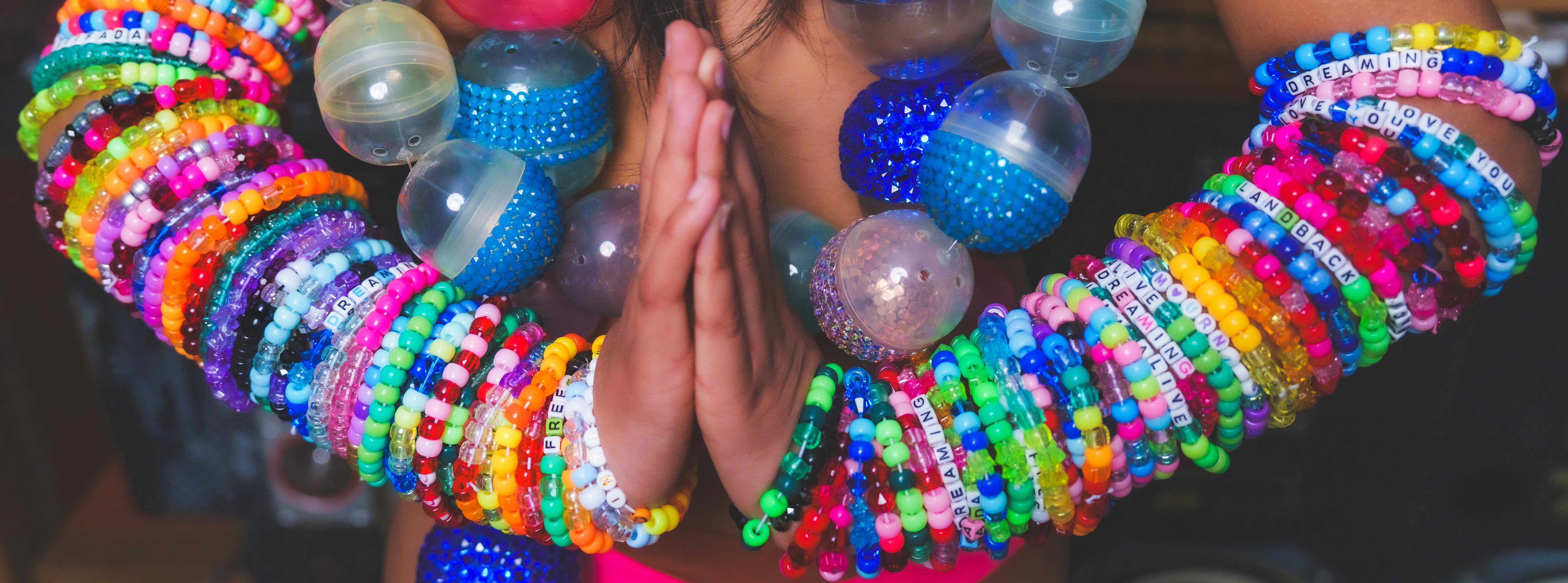
THANK YOU REINA FOR LETTING US INTO YOUR WONDERFUL WORLD! MUCH MORE TO COME, MAKE SURE TO KEEP MOURNING & DREAMING. GET YOURSELF A BUTTON AND SUPPORT THE CAUSE!
https://mourningdreaming.myshopify.com/
SUBJECT/BRAND
REINA QUINONEZ @driedmang0s
PHOTOGRAPHER
ELIZABETH SONG @elizabeths0ng
MODEL
REINA QUINONEZ @driedmang0s
EDITOR
E&C* @acediastudios
TEXT
E&C* @acediastudios